General
Glacier Study Tour in Northern Uzbekistan 15 Days – (2026-27)
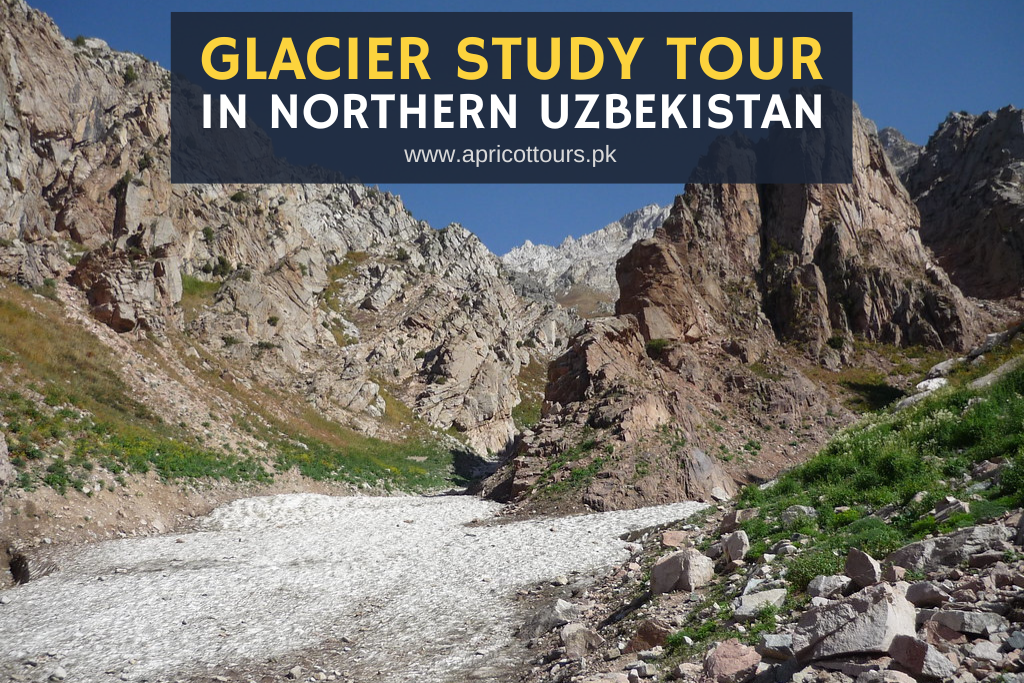
Discover the interesting Glacier Study Tour in Northern Uzbekistan, which explores the majestic Western Tien Shan Mountains. Furthermore, this research tour focuses on glacier landscapes, alpine ecosystems, and glacier-fed river systems. Participants gain knowledge about glaciology, climate change, and mountain hydrology through field exploration. Additionally, glaciers in the Pskem basin support regional rivers and ecosystems, making them critical to Central Asia’s water resources.
In addition to this tour, you can also explore other exciting Special Interest Tours listed in the table below.
Itinerary – Glacier Study Tour in Northern Uzbekistan
The itinerary for the Glacier Study Tour in Northern Uzbekistan appears below.
Day 02: Introduction to Glaciology & Regional Climate in Tashkent
On this Day
The second day is reserved for academic briefings and introductory lectures on glaciology, climate change, and hydrology in Central Asia. Participants investigate the scientific significance of glaciers in Uzbekistan and the surrounding mountain ranges. Researchers describe how glaciers in the Tien Shan mountains function as water towers, supplying meltwater to river systems that serve millions of people. Discussions also underscore the growing concern about glacier retreat due to rising temperatures, as well as the implications for the region's long-term water security.
Day 03: Tashkent to Charvak Reservoir & Western Tien Shan
On this Day
Travel from Tashkent to the steep terrain surrounding Charvak Reservoir in the Western Tien Shan. The path progressively shows the rough terrain shaped by tectonic activity and river erosion over millions of years. Participants view the convergence of rivers that flow from glacier-covered peaks into the reservoir. This area represents the transition from urban to alpine habitats, where glaciers influence hydrology and ecology. Field discussions cover the geological formation of the mountains and their importance in area climate research.
Day 04: Ugam-Chatkal National Park Exploration
On this Day
The day will be spent exploring Ugam-Chatkal National Park, one of Central Asia's largest protected mountain areas. Participants witness a variety of alpine environments, including forests, gorges, lakes, and high mountain valleys. The park is located in the Western Tien Shan, an area notable for glaciers and snow-covered peaks that affect river systems and wildlife. Researchers provide tools for studying mountain environments and explain how glaciers impact landscapes through erosion and sediment transport, assisting participants in understanding the relationship between glaciers and adjacent ecosystems.
Day 05: Chimgan Mountains & High-Altitude Landscape Studies
On this Day
Participants continue their journey deeper into the Western Tien Shan, exploring the Chimgan mountain range. The region offers magnificent vistas of snow-covered mountains and valleys created by past glacier action. Field discussions focus on the geomorphology of high alpine environments and the processes that shape valleys, ridges, and glacial cirques. Observations also show how snow buildup and melting affect mountain ecosystems. The day provides a practical introduction to alpine field observation techniques and prepares participants for future glacier research efforts.
Day 06: Transfer to the Pskem River Basin
On this Day
Travel to the remote Pskem River Basin, one of the largest glacier-fed watersheds in northeastern Uzbekistan. The basin is home to a large number of glaciers dispersed across the Western Tien Shan's high peaks. These glaciers provide water for rivers and agricultural areas downstream. Participants learn about glaciers' hydrological role in controlling river flow and ensuring water supply during dry years. As climate change continues to have an impact on alpine landscapes, discussions highlight the need for monitoring glacier change in the basin.
Day 07: Field Introduction to Glacier Monitoring Techniques
On this Day
The day covers realistic glacier monitoring techniques utilized by scientists in Central Asia. Participants watch while researchers assess glacier mass balance, snow accumulation, and meltwater flow. Glacier mapping, surface observations, and explanations of remote sensing methods for tracking glacier changes over time are also part of the field demonstrations. The events emphasize the significance of long-term scientific monitoring in understanding climatic impacts on alpine glaciers. Participants learn how glaciological data might assist in anticipating water availability for towns downstream.
Day 08: Trekking Toward Barkrak Glacier Study Area
On this Day
Participants travel to the Barkrak glacier section of the Pskem mountain range. The route crosses steep valleys and river channels formed by glacial meltwater. Barkrak glacier has been the subject of multidisciplinary scientific expeditions to investigate glacier dynamics, hydrology, and climate processes. The route offers an opportunity to see glacial formations such as moraines, ice-carved valleys, and alpine lakes. The discussions emphasize the scientific relevance of field excursions in learning how glaciers adapt to environmental changes.
Day 09: Barkrak Glacier Field Research
On this Day
The day is spent conducting a field study near the Barkrak Glacier. Participants investigate the glacier's surface structure and neighboring moraines while learning how scientists calculate ice flow and snow thickness. Researchers explain how glacier melt impacts mountain streams and regional water systems. The session also investigates the link between temperature, precipitation, and glacier mass balance. Observations provide a practical grasp of how glaciers form over time and how scientists track their changes through field measurements and satellite data.
Day 10: Glacier Hydrology & Mountain Water Systems
On this Day
This day's concentration is on hydrological investigations of glacier meltwater. Participants investigate how glacier runoff feeds rivers in the Pskem basin, supporting ecosystems and human settlements. Field conversations emphasize glaciers' seasonal function in maintaining water flow during periods of low rainfall. Participants watch meltwater streams and learn about methods for estimating glacier contributions to river discharge. The seminar emphasizes the critical relationship between glaciers and water supplies in Central Asian mountain ecosystems.
Day 11: Expedition to Pakhtakor Glacier
On this Day
Participants travel to the Pakhtakor Glacier, one of Uzbekistan's largest glaciers and an important source of water for the Pskem River. Located in an isolated alpine region, the glacier is an essential research site for climate scientists. Field conversations cover the history of glacier exploration in the region as well as the relevance of monitoring glacial retreat. Participants examine the surrounding alpine scenery and discuss how glaciers shape river valleys and mountain ecosystems.
Day 12: Pakhtakor Glacier Scientific Observation
On this Day
The study journey continues with a close inspection of the Pakhtakor Glacier. Participants investigate the glacier tongue, meltwater streams, and nearby moraines. Researchers describe how research teams evaluate glacier thickness, snow cover, and surface changes while on field missions. Studies have found that the glacier has receded and melted, emphasizing the effects of climate change in the Tien Shan Mountains. These observations help participants comprehend how glacier monitoring benefits climate science and environmental management.
Day 13: Climate Change & Glacier Retreat Studies
On this Day
The day's discussions center on climate change and its impact on glaciers in the Tien Shan mountain chain. Participants discuss scientific findings that demonstrate how rising temperatures accelerate glacier melting and reduce ice mass. Field observations are paired with scientific analysis to better understand long-term environmental patterns. Participants investigate the long-term implications of glacier retreat for Central Asian water security and ecosystems. The session focuses on glaciers as natural markers of climate change in high mountain regions.
Day 14: Return to Tashkent
On this Day
Participants return to Tashkent while reflecting on their field experiences from the glacier study expedition. The day involves academic discussions that summarize research observations made throughout the excursion. Participants discuss glacier monitoring techniques, hydrological studies, and environmental changes seen in the Western Tien Shan mountains. The return journey allows you to view significant landscapes and river systems generated by glacier activity, increasing your understanding of how mountain glaciers impact both the natural environment and regional water supplies.
Day 15: Departure to home country
On this Day
The glacier study journey in Uzbekistan comes to an end on the final day. Participants reflect on the scientific knowledge gathered during the expedition, such as glacier monitoring methods, mountain hydrology, and climate change effects on the Tien Shan glaciers. The tour provides essential information about glaciers' importance as natural water reservoirs and environmental indicators. After completing the academic and field components of the program, participants will leave Uzbekistan with a better understanding of how mountain glaciers support ecosystems and human communities throughout Central Asia.
Holiday Information
What’s included
- Pick up from the hotel or vacation rental before sightseeing
- Drop off at the hotel or vacation rental after sightseeing
- Guided sightseeing tour according to the itinerary above
- Map (hard copy)
- Licensed professional guide (English speaking)
- SUV/mini-van/car (depending on number of people)
- Driver
- All entry/admission tickets
- Bottled water in the car (fair usage policy)
- Toll & parking fees
What’s not included
- Drop after 10 pm (Drivers & Guides’ working hours end at 10 pm)
- Gratuities/tips for guides/drivers, etc
- Meals, snacks, and drinks (our guide will make recommendations after consultation with guests)
- Accommodation (can be arranged at additional cost according to your budget)
- Personal travel insurance (Recommendation/Rescue Partners: Global Rescue)
- Visa for Uzbekistan (supporting documents can be offered if requested for multiday tours)
- Refunds in case of early tour windup/closure due to any reason
- Anything not mentioned in the inclusions
Highlights – Glacier Study Tour in Northern Uzbekistan
The Glacier Study Trip in Northern Uzbekistan has a lot to offer. Below are the main highlights.
- Explore the Western Tien Shan Mountains and their glacier-fed alpine landscapes.
- Study glacier retreat patterns at Pakhtakor Glacier in northern Uzbekistan.
- Conduct hydrology observations across the Pskem River Basin glacier systems.
- Discover alpine biodiversity inside Ugam-Chatkal National Park mountain ecosystems.
- Observe glacial landforms and moraines near the Barkrak Glacier region.
- Learn glacier monitoring techniques at the Central Asian Mountain Observatory research sites.
- Explore scenic mountain valleys surrounding Charvak Reservoir, glacier-fed waters.
- Study climate change impacts across the Chatkal Range glacier environments.
- Trek through rugged alpine terrain in the Chimgan Mountains region.
- Examine glacier-fed rivers flowing from the Tien Shan Glacier Systems.

As Featured In:















Photo Gallery
Google Map
Overview – Glacier Study Tour in Northern Uzbekistan
The Glacier Study Tour provides an immersive academic experience across the Western Tien Shan Mountains. This region is home to glaciers, which have an impact on rivers, ecosystems, and water systems throughout Central Asia. Participants investigate mountain scenery, alpine valleys, and glacier-fed rivers while learning about glaciology and climate science. Furthermore, the program emphasizes how glaciers serve as natural water reservoirs in arid places. During warm months, glaciers release meltwater, which helps to sustain river flows during dry seasons. Therefore, studying these ice systems is critical for understanding water security and environmental change in Central Asia.
Furthermore, the journey focuses on important research locations, including the Pskem River Basin and the Western Tien Shan mountains. Many glaciers are found in the upper regions of the Pskem and Chatkal mountain basins, sculpting landscapes and feeding significant rivers. Participants see glacier formations, high-altitude habitats, and glacier-fed streams that drain into reservoirs like Lake Charvak. These rivers flow from glaciers in adjacent mountain ranges, providing water to downstream valleys and communities. In addition, the study tour covers glacier monitoring, climate research, and mountain hydrology. As a result, guests obtain scientific knowledge while visiting one of Central Asia’s most intriguing alpine landscapes.
Website Last Updated: January 15, 2026