General
Music Tourism Tour – 12 Days (2026-27)
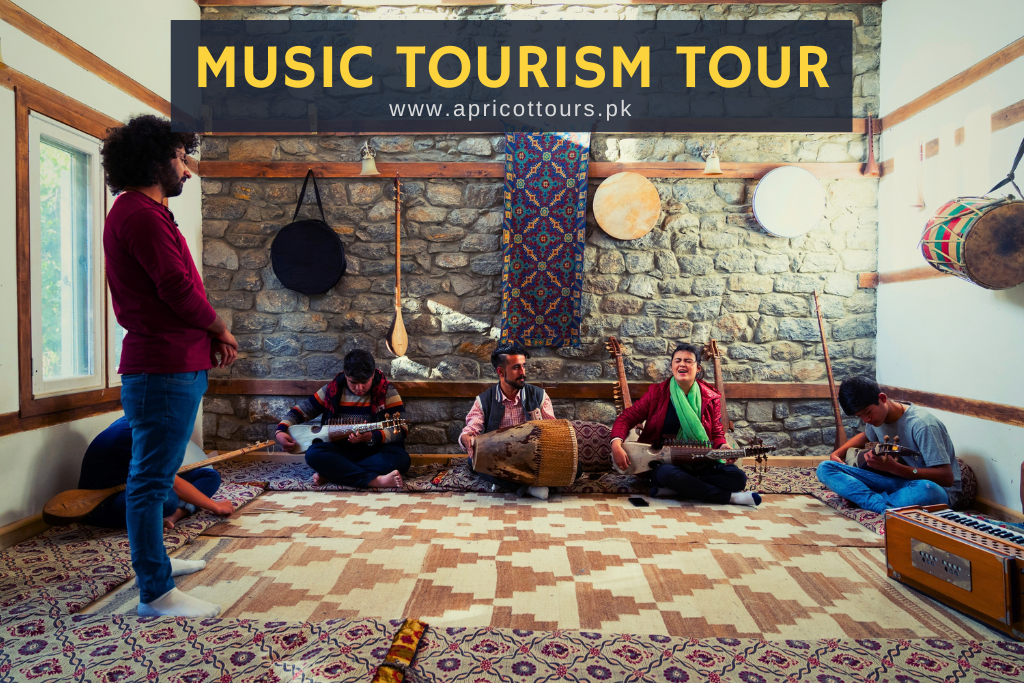
The Music Tourism Tour examines Pakistan’s living musical traditions, ethnic instruments, and devotional legacy. Beginning with folk influences in Islamabad, the voyage continues to Hunza and Gojal, where visitors will encounter the Leif Larsen Music Center and Bulbulik Heritage Center. Furthermore, the group visits Lahore to experience qawwali, Sufi poetry, shrine culture, and Punjabi rhythms. These experiences reveal Pakistan’s unique musical character through significant cultural encounters. Book Now!
In addition to this tour, we also offer the following Special Interest Tours, as shown in the table below.
| SPECIAL INTEREST TOURS | Cost (USD) | Cost (EUR) |
|---|---|---|
| Music Tourism Tour - 12 Days | 1560 | €1,560 |
| Educational/Student Field Tour Pakistan - 08 Days | 1040 | €1,040 |
| Geological Exploration Tour in Pakistan - 15 Days | 1950 | €1,950 |
| Glacier Study Tour in Northern Pakistan - 12 Days | 1560 | €1,560 |
| Research Tours - 17 Days | 2210 | €2,210 |
| EXHIBITION & EXPO TOURS IN PAKISTAN | ||
| Pakistan Industrial Visit Tour - 12 Days | 1560 | €1,560 |
| Exhibition & Expo Travel Package in Pakistan - 09 Days | 1170 | €1,170 |
| Trade Delegation Tour in Pakistan - 10 Days | 1300 | €1,300 |
| SPECIAL INTEREST TOURS | Cost (USD) | Cost (EUR) |
Itinerary – Music Tourism Tour
The itinerary for the Music Tourism Tour is given below.
Day 02: Islamabad - Folk Music Heritage
On this Day
Begin your exploration of Pakistan's musical tradition in Islamabad by visiting Lok Virsa, or the National Institute of Folk and Traditional Heritage. Its collections and recordings showcase regional instruments, folk traditions, classical influences, and devotional genres from throughout the country. Continue with a guided cultural orientation that focuses on the differences between music in Punjab, Gilgit-Baltistan, and Gojal, providing context for the next live encounters and community visits.
Day 03: Islamabad to Gilgit - Hunza
On this Day
Take a local aircraft from Islamabad to Gilgit, then drive to Hunza along the Karakoram Highway. The excursion introduces the stunning mountain setting that has shaped many of Gilgit-Baltistan's musical traditions. Arrive at Karimabad and check into your hotel before exploring the surroundings. Your guide will present Hunza's languages, instruments, dance customs, and community celebrations, preparing the group for direct interaction with local musicians in the coming days.
Day 04: Altit - Leif Larsen Music Center
On this Day
Explore Altit and pay a visit to the Leif Larsen Music Center, an important organization that promotes music education and the preservation of traditional music from Hunza and nearby regions. Meet musicians or instructors when arrangements allow, and learn about instruments, regional melodies, and musical knowledge transmission. Continue exploring Altit's historic environs and adjoining cultural areas, connecting the valley's architectural past to the current musical traditions of younger generations.
Day 05: Hunza - Local Musicians and Folk Traditions
On this Day
Spend another day in Hunza exploring community music, oral traditions, and local performance culture. Meet area artists when they are available and learn how songs are used to accompany festivities, storytelling, dance, and social events. Demonstrations may feature Gilgit-Baltistan-related string, wind, and percussion instruments. The experience also looks at how newer artists reimagine inherited tunes while remaining connected to older repertoires, languages, and the cultural identity of Hunza's mountain settlements.
Day 06: Hunza to Gulmit - Bulbulik Heritage Center
On this Day
Travel from Karimabad to Gulmit in Upper Hunza, passing via the Attabad Lake area and entering the Gojal Cultural Landscape. After arriving in Gulmit, visit the Bulbulik Heritage Center, which was established to assist in preserving Wakhi and Pamiri musical traditions. Meet local artists when they're available and learn about traditional songs, instruments, and performance traditions. The visit highlights Bulbulik's role in educating younger generations and documenting cultural expressions in the Wakhi community.
Day 07: Gulmit - Wakhi Music and Cultural Heritage
On this Day
Continue the music experience in Gulmit by delving deeper into Wakhi heritage, local songs, and traditional instruments. Engage with Bulbulik-related musicians wherever possible, learning about folk melodies, poetry, dance, and the relationship between music and mountain life. Explore Gulmit's historic village environment and communal spaces, as well as how cultural groups retain language and identity through performance, teaching, recording, and engagement by emerging artists.
Day 08: Gulmit to Gilgit - Flight to Islamabad
On this Day
Leave Gulmit and return to Gilgit, going via Hunza's mountain corridor and settlements representing many linguistic and musical communities. Take a domestic aircraft from Gilgit to Islamabad, subject to operating conditions, and then transfer to your accommodation. This trip day marks a shift from northern folk customs to Punjab's Sufi musical history, which will be the primary emphasis of the final section of the tour in Lahore.
Day 09: Islamabad to Lahore
On this Day
Travel from Islamabad to Lahore and relax at the final musical stop on the trip. Begin with an overview of Punjab's Sufi poetry, qawwali, folk music, and religious traditions. Explore portions of medieval Lahore while learning about poets, saints, shrines, and musicians associated with the city's culture. The guide will also discuss polite behavior at active shrines and the context of devotional performances.
Day 10: Lahore's Data Darbar and Qawwali
On this Day
Visit Data Darbar, one of Lahore's most important spiritual locations, to learn about its Sufi music traditions. Discover the shrine's relationship to qawwali, sama, pilgrimage, and the lasting impact of Sufi poetry on musical expression. Continue via historical sites before attending or arranging a qawwali experience, if accessible. The emphasis is on understanding devotional music in its religious, social, and cultural context, rather than as produced entertainment.
Day 11: Lahore – Madho Lal Hussain and Shah Jamal
On this Day
Visit the Madho Lal Hussain shrine to learn about Shah Hussain's legacy, Punjabi Sufi poetry, and Mela Chiraghan traditions. Continue to Shah Jamal, which is historically associated with dhol, dhamal, and spiritual gatherings. Depending on local programming, incorporate a tailored Sufi or qawwali performance, or attend a relevant cultural event at a reputable location. This final full day brings together poetry, rhythm, spirituality, and Lahore's thriving musical traditions.
Day 12: Fly from Lahore
On this Day
Conclude the Music Tourism Tour in Lahore with a leisurely departure and concluding remarks on Pakistan's unique musical heritage. Depending on the flight itinerary, travelers may have the opportunity to explore independently or just prepare for their next destination. Transfer to the Allama Iqbal International Airport for departure. Fly home from Lahore with recollections of Sufi qawwali, Punjabi poetry, Hunza folk traditions, Wakhi music, traditional instruments, and meaningful interactions with musicians and cultural communities.
Dates & Cost – Music Tourism Tour
All seasons are considered good for the tour. Considering the inflow of tourists all year round, our dates are open throughout the year, and your bookings will be 100% guaranteed even if you are a single traveler. Our prices and dates for this tour (all seasons) are given below.
| Season | Months | Tour Start Date | Price Per Person (USD) | Minimum Travellers Required | Register |
|---|---|---|---|---|---|
| Winter | Mid-November to February, 2027 | Daily | 1560 | 1 pax | BOOK NOW |
| Spring | March to May, 2027 | Daily | 1560 | 1 pax | BOOK NOW |
| Summer | June to Mid- September, 2027 | Daily | 1560 | 1 pax | BOOK NOW |
| Autumn | Mid-September to Mid November, 2026 | Daily | 1560 | 1 pax | BOOK NOW |
| Season | Months | Tour Start Date | Price Per Person (USD) | Minimum Travellers Required | Register |
Holiday Information
- Pickup from hotel or vacation rental before sightseeing
- Drop at hotel or vacation rental after sightseeing
- Guided sightseeing tour according to itinerary above
- Map (hard copy)
- Licensed professional guide (english speaking)
- SUV/mini-van/car (depending on number of people)
- Driver
- All entry/admission tickets
- Bottled water in car (fair usage policy)
- Toll & parking fees
- Drop after 10 pm (Drivers & Guide's working hours end at 10pm)
- Gratuities/tips for guides/drivers, etc
- Meals, snacks and drinks (our guide will make recommendations after consultation with guests)
- Accommodation (can be arranged at additional cost according to your budget)
- Personal travel insurance (Recommendation/Rescue Partners: Global Rescue)
- Visa to Pakistan (supporting documents can be offered if requested for multiday tours)
- Refunds in case of early tour windup/closure due to any reason
- Anything not mentioned in inclusions
Highlights
The tour has a lot to offer. The main highlights are given below.
- Explore Leif Larsen Music Centre, preserving Hunza traditions.
- Discover Bulbulik Heritage Centre, preserving Wakhi musical heritage.
- Experience Hunza folk music through community musician encounters.
- Learn Wakhi music traditions through Gulmit cultural exchanges.
- Explore Lok Virsa and Pakistan’s regional music heritage.
- Experience Data Darbar through Lahore’s qawwali traditions.
- Discover Madho Lal Hussain through Punjabi Sufi poetry.
- Experience Shah Jamal through historic dhol traditions.
- Explore Sufi qawwali within Lahore’s devotional music culture.
- Discover traditional instruments shaping Pakistan’s musical diversity.

As Featured In: [logoshowcase cat_id="217"]
Overview – Music Tourism Tour
The Music Tourism Tour highlights Pakistan’s live traditions, community musicians, devotional expressions, and regional instruments. The voyage begins in Islamabad and highlights Pakistan’s unique musical heritage before going to Hunza and Gojal. Visitors to Altit can visit the Leif Larsen Music Center, which provides free lessons and performing opportunities for young musicians. Furthermore, the center works to preserve musical traditions from Hunza and nearby regions. The path then continues to Gulmit, the location of the Bulbulik Heritage Center. Wakhi-Pamiri music, folklore, songs, and oral traditions continue to play an important role in cultural preservation and education. As a result, visitors can hear music in villages where these traditions are still practiced.
The tour continues south to Lahore, where Sufi poetry and devotional music shape the cultural experience. Visits to major shrines reveal connections among spirituality, qawwali, folk music, dhol rhythms, and centuries-old Punjabi poetry. Furthermore, traditions associated with Shah Hussain and Mela Chiraghan underscore Lahore’s longstanding ties to Sufi expression. Travelers can also learn how devotional performance weaves together poetry, rhythm, faith, and shared cultural memory. As a result, the tour blends performance, cultural interpretation, and community engagement across diverse locations. From mountain tunes to qawwali, travelers gain a deeper understanding of Pakistan’s musical identity and cultural diversity.
Website Last Updated: September 15, 2026