General
Wildlife Photography Tour in Pakistan – 14 Days (2026-27)
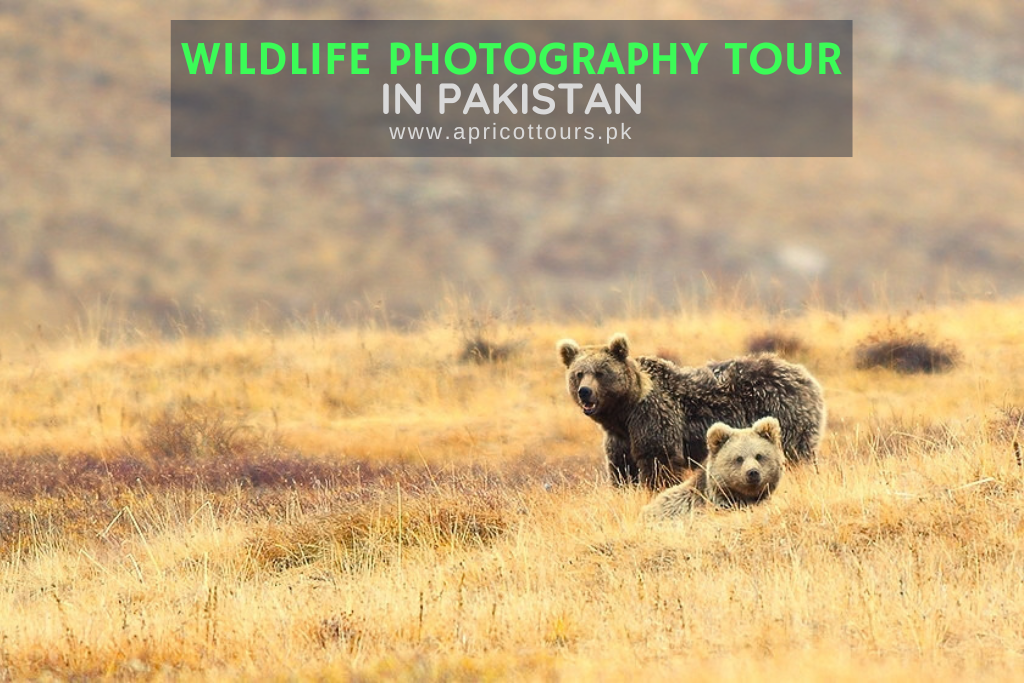
The Wildlife Photography Tour in Pakistan takes you on an exciting adventure through the breathtaking mountain landscapes of Deosai, Hunza, and Khunjerab. Photographers can also snap Himalayan brown bears, golden marmots, ibex, and amazing alpine birds. Dramatic valleys and high plateaus make for dramatic natural settings. Meanwhile, professional local counsel encourages careful wildlife observation. As a result, this journey combines conservation, adventure, and photography in Pakistan’s breathtaking northern countryside.
In addition to this tour, we also offer the following Photography Tours in Pakistan, as shown in the table below.
| PHOTOGRAPHY TOURS IN PAKISTAN | Cost (USD) | Cost (EUR) |
|---|---|---|
| Landscape Photography Tour in Pakistan - 15 Days | 1950 | €1,950 |
| Documentary Tour in Pakistan - 16 Days | 2080 | €2,080 |
| Wildlife photography tour in Pakistan - 14 Days | 1820 | €1,820 |
| Indus Dolphin Tours (Sukkur-Guddu & Taunsa Barrage) - 06 Days | 780 | €780 |
| Filming Tours in Pakistan - 18 Days | 2340 | €2,340 |
| Location Scouting Tours in Pakistan - 21 Days | 2730 | €2,730 |
| PHOTOGRAPHY TOURS IN PAKISTAN | Cost (USD) | Cost (EUR) |
Itinerary – Wildlife Photography Tour in Pakistan
The itinerary for the tour is given below.
Day 02: Islamabad to Skardu
On this Day
Travel from Islamabad to Skardu by domestic airplane, subject to operating conditions, and then to your hotel. Spend the rest of the day acclimatizing and preparing equipment for the Deosai portion. Skardu offers access to Deosai National Park, one of Pakistan's most important high-altitude wildlife reserves. Before heading to the plateau for several days of serious photography, go over long-lens setups, protective gear, batteries, memory cards, and field routines.
Day 03: Skardu to Deosai National Park
On this Day
Drive from Skardu to Deosai National Park, past Sadpara Lake and gradually climbing into the high plateau. Enter the park and proceed to the camping area, pausing only where conditions permit safe wildlife observation. Begin photographing golden marmots, alpine birds, broad grasslands, streams, and panoramic mountain views. Deosai was founded largely to conserve the Himalayan brown bear, but it also supports wolves, ibex, red foxes, raptors, and other high-altitude animals.
Day 04: Wildlife Photography in Deosai
On this Day
Spend a full day of wildlife photography in Deosai National Park, with local guides and park laws controlling all movements. Search suitable valleys and open slopes for Himalayan brown bears while keeping a safe viewing distance. Photograph golden marmots in their colonies, and keep an eye out for Tibetan red foxes, Himalayan ibex, and passing raptors. The large plateau also provides a good opportunity for environmental wildlife portraits, capturing animals in Deosai's extensive grasslands, wetlands, and mountain settings.
Day 05: Wildlife Exploration in Deosai
On this Day
Continue your exploration of Deosai with another specialized photographic day focusing on various ecosystems and wildlife behavior. Visit locations near streams, meadows, rocky slopes, and suitable observation points with minimal disturbance. Brown bears, marmots, wolves, foxes, and mountain birds can all be found depending on their natural movements and conditions. Photographers can chronicle the incredible variety of Pakistan's high-altitude plateau by working on wider habitat compositions, long-lens portraits, behavioral sequences, and bird photography.
Day 06: Deosai – Sheosar Lake – Skardu
On this Day
Travel across Deosai toward Sheosar Lake, photographing the surrounding alpine beauty, wetlands, birdlife, and wildlife along the way. The lake is located within Deosai National Park and contributes significantly to the plateau's photographic story. Continue to examine the open slopes for marmots, foxes, ibex, and distant bears. After finishing the final Deosai shooting session, return to Skardu with photographs of wildlife, habitat, and high-mountain conservation vistas.
Day 07: Skardu to Gilgit
On this Day
Drive from Skardu to Gilgit along the mountain road that connects Baltistan and the upper Indus Valley. The trek passes through magnificent river valleys, arid slopes, and towns framed by the Karakoram. Stop at appropriate spots for landscape and opportunistic bird photography without compromising your trip plans. Arrive in Gilgit and check into your hotel before continuing to Hunza and Upper Hunza, where the tour will focus on ibex, blue sheep, and high-altitude wildlife.
Day 08: Gilgit to Hunza
On this Day
Continue on the Karakoram Highway from Gilgit to Hunza, stopping to photograph suitable overlooks and mountain environments. The trail provides panoramic views of the Karakoram and access to valleys inhabited by Himalayan ibex and other alpine species. Arrive in Karimabad and explore the surrounding area while acclimatizing more. This day also offers an opportunity to photograph native birds, rocky cliffs, river corridors, and the stunning alpine landscape that contributes to northern Pakistan's overall biological setting.
Day 09: Hunza to Passu and Upper Hunza
On this Day
Travel from central Hunza to Upper Hunza via Attabad Lake, Gulmit, and Passu, following the Karakoram Highway to higher animal habitat. Establish a base in Passu or adjacent Gojal and meet local guides who are knowledgeable about the surrounding regions. Photograph mountain scenery and search rocky slopes for Himalayan ibex and raptors. Upper Hunza provides access to Khunjerab National Park, home to ibex, blue sheep, Tibetan wolf, golden marmot, and snow leopard.
Day 10: Khunjerab National Park Wildlife Photography
On this Day
Enter Khunjerab National Park and begin targeted wildlife photography in its alpine valleys, cliffs, and wide mountain slopes. Search for Himalayan ibex, blue sheep, golden marmots, Tibetan red foxes, and birds of prey while using long lenses and keeping a safe distance. Khunjerab was constructed in part to safeguard Marco Polo sheep, but it is also notable for its snow leopard habitat. Sightings are still largely reliant on natural wildlife movement, weather, access, and park laws.
Day 11: Wildlife Photography in Khunjerab
On this Day
Spend another day in Khunjerab National Park to improve your chances of photographing wildlife in varied terrain. Collaborate with local guides to locate productive observation sites while minimizing needless disturbance. Focus on ibex herds, blue sheep where they exist, marmots, foxes, golden eagles, Himalayan griffons, and snowcocks. Wide compositions can showcase animals against the Karakoram landscape, whereas telephoto photography can capture activity, horn detail, movement, and interactions in the park's high-altitude setting.
Day 12: Khunjerab and Upper Hunza Wildlife Photography
On this Day
Continue wildlife photography in the Khunjerab and Upper Hunza regions, with the option of returning to sites where animals have previously been observed. The extended field day provides more opportunities for patient observation rather than dashing between venues. Look for ibex, blue sheep, marmots, foxes, wolves, and mountain birds on rocky peaks, alpine meadows, and in wide valleys. Snow leopard indicators may rarely be seen, but direct sightings are uncommon and should never be offered as a guarantee.
Day 13: Upper Hunza to Gilgit
On this Day
Leave Upper Hunza and return to Gilgit along the Karakoram Highway, making stops for landscape, bird, and opportunistic wildlife photography. Photograph the changing environment as high alpine landscape transitions to drier mountain valleys and river channels. The trek also affords one last opportunity to photograph the stunning landscape of northern Pakistan. Arrive in Gilgit and coordinate images, equipment, and transport arrangements before returning to Islamabad for the tour's last part.
Day 14: Gilgit to Islamabad
On this Day
Travel from Gilgit to Islamabad via domestic flight, according to operating conditions, and transfer to your accommodation or next destination. Use the remainder of the tour to reflect on your photography excursion through Deosai, Hunza, and Khunjerab. The voyage culminates with a broad portfolio that includes Himalayan brown bears, marmots, mountain ungulates, birds, and high-altitude environments. Wildlife encounters are natural and unpredictable, focusing the experience on ethical observation rather than guaranteed sightings.
Dates & Cost – Wildlife Photography Tour in Pakistan
All seasons are considered good for the tour. Considering the inflow of tourists all year round, our dates are open throughout the year, and your bookings will be 100% guaranteed even if you are a single traveler. Our prices and dates for this tour (all seasons) are given below.
| Season | Months | Tour Start Date | Price Per Person (USD) | Minimum Travellers Required | Register |
|---|---|---|---|---|---|
| Winter | Mid-November to February, 2027 | Daily | 1820 | 1 pax | BOOK NOW |
| Spring | March to May, 2027 | Daily | 1820 | 1 pax | BOOK NOW |
| Summer | June to Mid- September, 2027 | Daily | 1820 | 1 pax | BOOK NOW |
| Autumn | Mid-September to Mid November, 2026 | Daily | 1820 | 1 pax | BOOK NOW |
| Season | Months | Tour Start Date | Price Per Person (USD) | Minimum Travellers Required | Register |
Holiday Information
- Pickup from hotel or vacation rental before sightseeing
- Drop at hotel or vacation rental after sightseeing
- Guided sightseeing tour according to itinerary above
- Map (hard copy)
- Licensed professional guide (english speaking)
- SUV/mini-van/car (depending on number of people)
- Driver
- All entry/admission tickets
- Bottled water in car (fair usage policy)
- Toll & parking fees
- Drop after 10 pm (Drivers & Guide's working hours end at 10pm)
- Gratuities/tips for guides/drivers, etc
- Meals, snacks and drinks (our guide will make recommendations after consultation with guests)
- Accommodation (can be arranged at additional cost according to your budget)
- Personal travel insurance (Recommendation/Rescue Partners: Global Rescue)
- Visa to Pakistan (supporting documents can be offered if requested for multiday tours)
- Refunds in case of early tour windup/closure due to any reason
- Anything not mentioned in inclusions
Highlights
The tour has a lot to offer. The main highlights are given below.
- Photograph Himalayan brown bears across Deosai’s wilderness.
- Capture playful golden marmots across alpine meadows.
- Observe Tibetan red foxes roaming Deosai plains.
- Photograph soaring golden eagles above mountain habitats.
- Explore Sheosar Lake amid remarkable wildlife habitats.
- Discover Himalayan ibex across Khunjerab’s rugged slopes.
- Track elusive snow leopards within protected habitat.
- Photograph blue sheep across high alpine terrain.
- Experience Khunjerab National Park and mountain wildlife.
- Capture Passu Cones within dramatic Karakoram scenery.

As Featured In:














Overview – Wildlife Photography Tour in Pakistan
The Wildlife Photography Trip in Pakistan visits some of the country’s most abundant high-altitude habitats in Gilgit-Baltistan. The expedition concentrates on Deosai, Hunza, and Khunjerab, where spectacular landscapes sustain incredible mountain fauna. Deosai serves as Pakistan’s primary habitat for Himalayan brown bears, as well as golden marmots, wolves, foxes, and Himalayan ibex. Furthermore, its broad plateau provides ideal circumstances for photographing animals in expansive natural settings. The excursion then continues to Gilgit and Hunza, where you can observe wildlife while admiring the stunning Karakoram scenery. As a result, photographers can snap both intimate wildlife subjects and larger environmental compositions during the journey.
Further north, Khunjerab National Park provides another excellent backdrop for wildlife photography in Pakistan. The park is home to Himalayan ibex, blue sheep, Marco Polo sheep, snow leopards, wolves, marmots, and a variety of alpine bird species. Furthermore, golden eagles, Himalayan griffons, and snowcocks provide excellent opportunities for bird photographers. Experienced local guides direct tourists to valuable ecosystems while promoting careful observation and minimal disruption. However, all sightings are contingent on natural animal migration and environmental factors. Overall, this wildlife photography vacation in Pakistan combines conservation, adventure, patience, and photography across the breathtaking Himalayan and Karakoram ecosystems.
Website Last Updated: September 15, 2026