General
Dilisang Pass Trek (19 Days) – Afghanistan/Pakistan (2026-27)
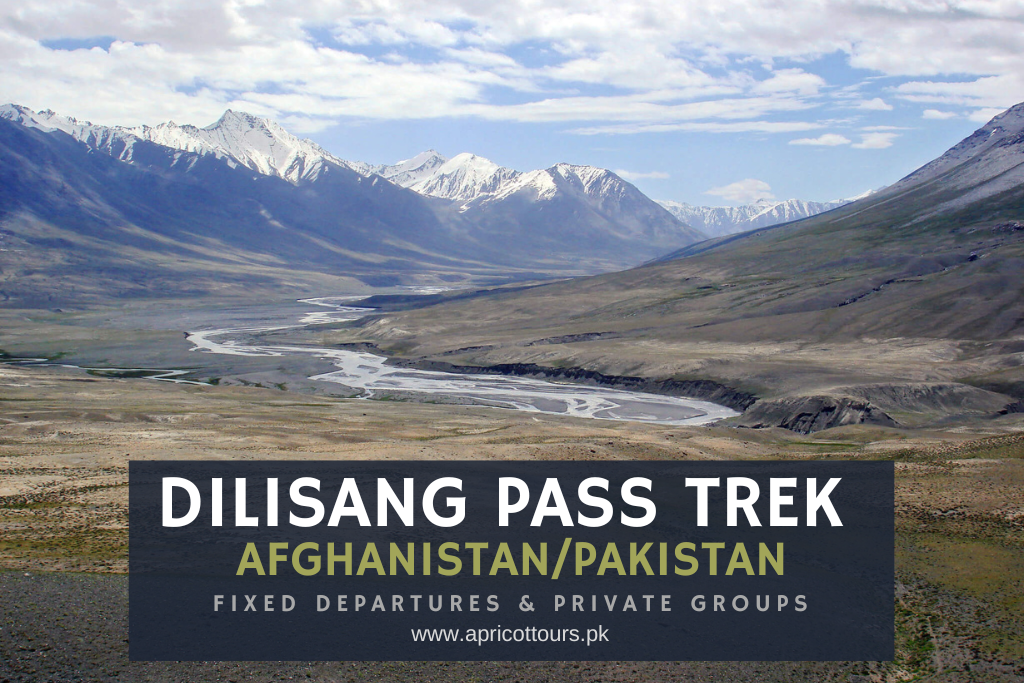
The Dilisang Pass Trek is a unique and difficult transboundary excursion that connects Afghanistan’s Little Pamir with Pakistan’s Hunza Valley. This wild path goes via glaciers, high mountains, and forgotten valleys originally utilized by Silk path traders. It provides spectacular alpine landscapes, cultural experiences, and an unparalleled sense of adventure throughout the Pamir and Karakoram mountains.
In addition to this trek, we offer the following adventure options in Afghanistan, as listed in the table below.
Dates & Cost – Dilisang Pass Trek
Summers are ideal for the trek. The start and end dates in the table below are your arrival and departure dates from Afghanistan. The months mentioned below are the ideal months for trekking in the Pamir region of Afghanistan. We have guaranteed departures every year. Our dates and costs for the trek are given below.
Holiday Information
- Licensed professional guide (government requirement)
- Airport transfers on the first and last day
- All road transport in Afghanistan
- Hotel accommodation in Afghanistan (twin sharing rooms)
- Trekking accommodation in Afghanistan (twin sharing tents)
- Hotel meals in Afghanistan (breakfast, lunch and dinner)
- Trekking meals in Afghanistan (breakfast, lunch and dinner)
- Trekking logistics (tents, non-personal equipments and tools)
- Support staff (cook, assistant(s) etc)
- Porters for trekking equipments, kitchen (supplies, tools, equipments, crockery, gas) and personal luggage
- Travel Insurance (recommendations only)
- Visa to Afghanistan (supporting documents offered)
- International airfare
- Personal equipments (list provided on registration or request)
- Tips for guides, porters, staff etc
- Miscellaneous (drinks, phone calls, laundry, souvenir etc)
Highlights
The Dilisang Pass Trek has a lot to offer. Below are the main highlights:
- Cross the Dilisang Pass (5,290m) between Afghanistan and Pakistan.
- Walk through the historic Wakhjir Valley of the ancient Silk Route.
- Explore the remote Kamansu Valley leading to the Afghan Pamir.
- Visit the mysterious Bozai Gumbaz tombs near Chaqmaqtin Lake.
- Experience traditional life in Kyrgyz and Wakhi herder camps.
- Enjoy views of Qarun Koh (7,164m) from the mountain ridge.
- Camp at Dilisang Uween-e-Ben (4,551m) under snowy peaks.
- Spot wild alpine flowers and mountain wildlife along the route.
Itinerary – Dilisang Pass Trek
The itinerary for the Dilisang Pass is given below.
Day 02: Travel in Faizabad
On this Day
Your adventure will begin in Kabul. From there, continue north, going through Gulbahar and entering the Hindukush mountains via the Salang Tunnel. After entering Baghlan, proceed east to Faizabad, Badakhshan's province capital. The day will conclude with an overnight stay at a reputable hotel in Faizabad.
Day 03: Faizabad to Ishkashim - Road to Wakhan
On this Day
The adventure continues as you travel from Faizabad to Ishkashim in the rural northeast. The drive takes you via breathtaking valleys and mountain roads to this small village, which serves as the Wakhan Corridor's gateway. Upon arrival, you will spend the night at a small guesthouse.
Day 04: Ishkashim to Qila-e Panja
On this Day
Following breakfast in Ishkashim, the journey continues along the ancient Wakhan Corridor to Qila-e Panja. The road follows a mythical route originally taken by Silk Road travelers such as Marco Polo and the Chinese monk Hsuan Tsang. Qila-e Panja, located at the confluence of the Pamir and Wakhan Rivers that create the Panj, has Sassanid roots. Overnight accommodations are in a small guesthouse.
Day 05: Journey to Sarhad-e-Broghil
On this Day
Continue your journey into the Corridor by jeep, this time along the less-traveled Little Pamir River valley. This rural route goes to Sarhad e Broghil, a village of about 500 Wakhi people. The overland vehicles are left behind, indicating that the Wakhan Valley Trek will continue on foot.
Day 06: Sarhad-e-Broghil – Daliz Pass – Borak
On this Day
The walk starts with one of the most difficult days, leaving behind the small Wakhan Corridor, where the river becomes too steep to follow. From Sarhad-e-Broghil, the trail ascends to the Daliz Pass at 4,260 meters, gaining approximately 1,000 meters in a short distance. This alpine route gives magnificent views of the rocky Hindu Kush ranges before dropping into the settlement of Borak, where we will spend the night surrounded by high mountains.
Day 07: Trek to Langar
On this Day
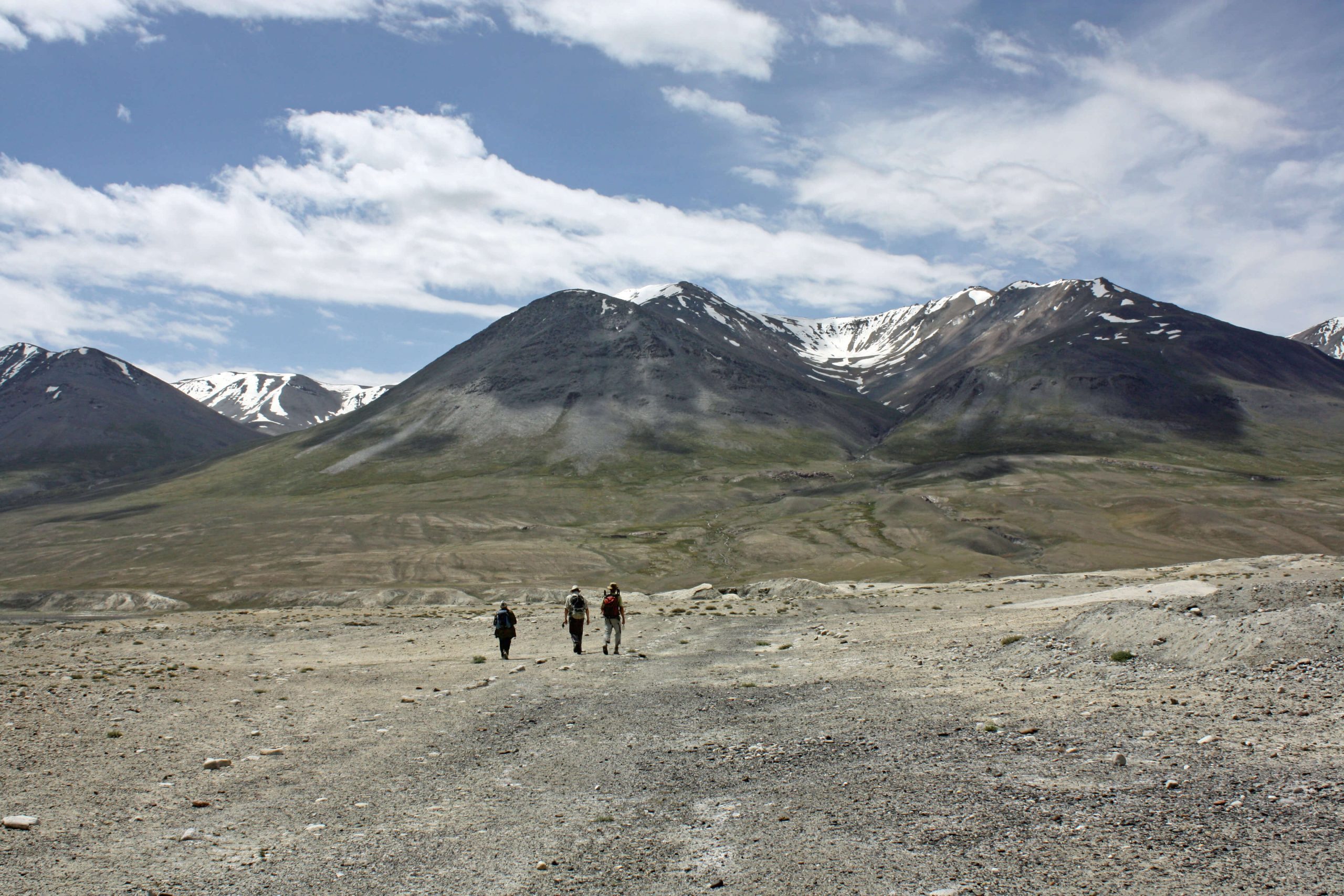
Leaving Borak, the path takes us through the Wakhan River valley. This stretch is frequently alive with the seasonal movement of shepherds returning their sheep to the larger communities. The scenery widens up into alpine meadows, where yaks and sheep graze. Our destination is Langar, a typical grazing region whose name means "free buffet." The Wakhi's culture and pastoral life become clear here, providing insight into their long-standing interaction with the land.
Day 08: Trek to Kashch Goz
On this Day
Today's trip takes us out of the steep-sided Wakhan Valley and into the Afghan Pamir plains. The terrain changes dramatically, with towering cliffs giving way to broad high-altitude grasslands. We arrive to Kashch Goz, the Kyrgyz community's lowest settlement, where travelers frequently switch Wakhi pack animals for Kyrgyz yaks or horses better adapted to the Pamir landscape. The night is spent at a camp near these dispersed Kyrgyz communities.
Day 09: Trek to Guretuk Camp
On this Day
Leaving Kashch Goz, the track travels through the Wakhjir Valley, a large U-shaped glacier valley with meadows and snow-capped peaks. The road travels through historic landmarks, such as domed tombs and the remains of previous Silk road travelers. The day concludes at Guretuk, a traditional winter destination for Kyrgyz herders that offers adequate camping grounds near freshwater sources.
Day 10: Trek Diwansu Camp
On this Day
Continuing through the Wakhjir Valley, the trail passes various Kyrgyz winter camps, including Aqtash, which is surrounded by rocky Pamir scenery. The trail steadily ascends, providing regular vistas of the surrounding peaks. The day's hike ends at Diwansu, a high valley town that marks the entrance to the less-explored Kamansu Valley.
Trip to the Upper Wakhjir Valley (Optional)
On this Day
Trekkers can prolong their adventure by taking a two- to three-day expedition to the head of the Wakhjir Valley Pass, which offers a more in-depth examination of the historic Silk Route corridor and breathtaking mountain views. This detour highlights glaciers, remote Kyrgyz camps, and old caravan routes that formerly connected Central Asia to China.
Day 11: Trek to Kamansu Valley Camp
On this Day
From Diwansu, the road heads south into the Kamansu Valley, skirting the rocky gorge at its entrance with towering terraces. The Kamansu River is a powerful glacial stream, and sufficient water sources are strategically placed along its banks. The day ends at a campsite on grassy plains above the gorge, with views of the surrounding snowy ridges.
Day 12: Trek to Dilisang Uween-e-Ben (4,551m)
On this Day
The trail continues into a side valley off Kamansu, rising through wildflower meadows and talus slopes. The day's target is Dilisang Uween-e-Ben (4,551m), a base camp beneath a glacier at the valley's head. This spot allows for acclimatization and preparation for the following day's trek to Dilisang Pass.
Day 13: Trek to Dilisang Pass (5,290m)
On this Day
A difficult ascent over a snow-covered glacier leads to Dilisang Pass, at 5,290 meters, the border between Afghanistan and Pakistan. The pass, marked with cairns at the crest, gives views of Qarun Koh (7,164m) and the surrounding peaks. On the Pakistani side, the fall begins steeply and then levels off into stony basins and lush meadows.
Day 14: Descent to Misgar Uween-e-Ben
On this Day
Following the steep initial descent, the trail heads into the upper Dilisang Valley. The trek takes you over rocky terrain mixed with grassy spots until you reach Misgar Uween-e-Ben, a high-altitude pasture with water and decent camping conditions. From here, the walk begins its approach to the Hunza Valley.
Day 15: Trek to Watwashk Camp
On this Day
Trekkers descend further into the Dilisang Valley, crossing scree slopes and following the Dilisang River. Along the trip, springs and forests provide temporary respite from the otherwise desolate landscape. The day concludes in Watwashk Camp, close to a perilous bridge crossing the Dilisang River.
Day 16: Trek to Misgar Village
On this Day
The trail continues over scree slopes and valleys until it reaches the junction of the Dilisang and Kilik rivers. From here, a jeep trail goes to Misgar, a rural village in the upper Hunza Valley. This concludes the expedition's trekking part.
Day 17: Misgar Village to Hunza
On this Day
Leaving Misgar, travelers take a picturesque jeep ride to Hunza, traveling through stunning valleys framed by the towering peaks of the Karakoram Range. The trip provides spectacular mountain views and glimpses of historic towns that highlight the region's rich cultural variety. When you arrive, explore Hunza's vibrant atmosphere, visiting historic sites and picturesque surroundings before settling in for the night.
Day 18: Drive to Gilgit – Fly to Islamabad
On this Day
After breakfast, drive from Hunza to Gilgit, where a domestic flight connects the northern highlands to Pakistan's capital. Weather permitting, the short trip provides passengers with breathtaking aerial views of the Karakoram Range, including the beautiful Nanga Parbat. After arriving in Islamabad, take a well-deserved rest and reflect on your unforgettable journey through northern Pakistan's remote and breathtaking landscapes.
Day 19: Fly to Home Country
On this Day
The voyage culminates in an international departure from Islamabad. After enduring the strenuous journey through the Afghan Pamir and Karakoram ranges, participants return home with lasting memories of a rare and remarkable expedition—one that traversed the remote, untamed wilderness corridors that connect the heart of Central Asia's final great frontier.
Why Register Early?
1. Early Bird Discount: The given prices for the holiday are limited-time discount offers and are subject to change. Service providers including (but not limited) to airlines and hotels increase prices in peak-season. Early reservations cost less than peak-season.
2. Limited Flight Seats: Domestic flight seats to the Pamir and Himalayas are sold out way ahead of time because there are only two daily flights during peak season. Among other things, the deposit is used to book domestic flights for you in advance.
3. Pay Balance after arrival in Afghanistan: In these unusual times, we appreciate that paying the final balance for your trip may cause concern. Our policy is to only receive your final balance once you arrive in Afghanistan. The only payment before arrival is the deposit.
4. Deposit valid for 3 years: We understand the uncertainty surrounding the pandemic (Covid-19). As part of our relaxed booking conditions following Covid-19, deposits are valid for 2 years.
6. Pay Minimum Deposit: The deposits for the holiday are also early-bird discounts and automatically change accordingly:
- 1st October: USD 190
- 1st November: USD 290
- 1st January: USD 350
- 15th February: USD 400
- 1st March: USD 450
- 1st May: USD 490
Note: The same dates above apply to next season's deposits.
Refund Policy for All
Deposit: Once paid, the deposit is non-refundable (but valid for 2 years) as it will be spent on making in-country arrangements.
Balance: Pay the balance only after arrival in Afghanistan on the first day. Payment guidelines will be shared timely.
Currency
All international travelers can pay in US Dollars (USD) or equivalent in Euros (EUR) or Pound Sterling (GBP). Pakistani travelers are charged the equivalent in Pakistani Rupees (PKR).
Single Supplement
Separate hotel rooms (single supplement) will cost an additional USD 290. This includes all hotel nights. This payment should be made with the balance upon arrival.
Separate tents (single tent) will cost an additional USD 180. This includes the cost of additional porterage. This payment should also be made with the balance in Afghanistan.

As Featured In:














Map
Overview – Dilisang Pass Trek
The Dilisang Pass is one of the most difficult and under-traveled routes connecting Afghanistan’s remote Wakhan Corridor to Pakistan’s upper Hunza Valley. The trek begins at Sarhad-e-Broghil and travels through the austere landscapes of the Little Pamir, following the historic Wakhjir Valley before turning south into the Kamansu Valley. The trek’s climax is the passage of Dilisang Pass at 5,290 meters, a glaciated boundary characterized by towering peaks, snowfields, and cairns that have guided traders and herders for ages.
On the Pakistani side, the descent leads through the desolate yet dramatic Dilisang Pass to Misgar in the Karakoram, alternating between austere rockscapes and occasional green pastures. The walk includes cultural exchanges with Kyrgyz and Wakhi herders, Silk Route archaeological sites, and breathtaking alpine landscapes. The Dilisang Trek, with its remote location, high altitude, and tough conditions, provides a rare and adventurous crossing between the Afghan Pamir and Pakistan, making it ideal for experienced trekkers looking for a true wilderness excursion.
Website Last Updated: January 15, 2026