General
Big Pamir River Trek (Zorkol River Route) 17 Days (2026-27)
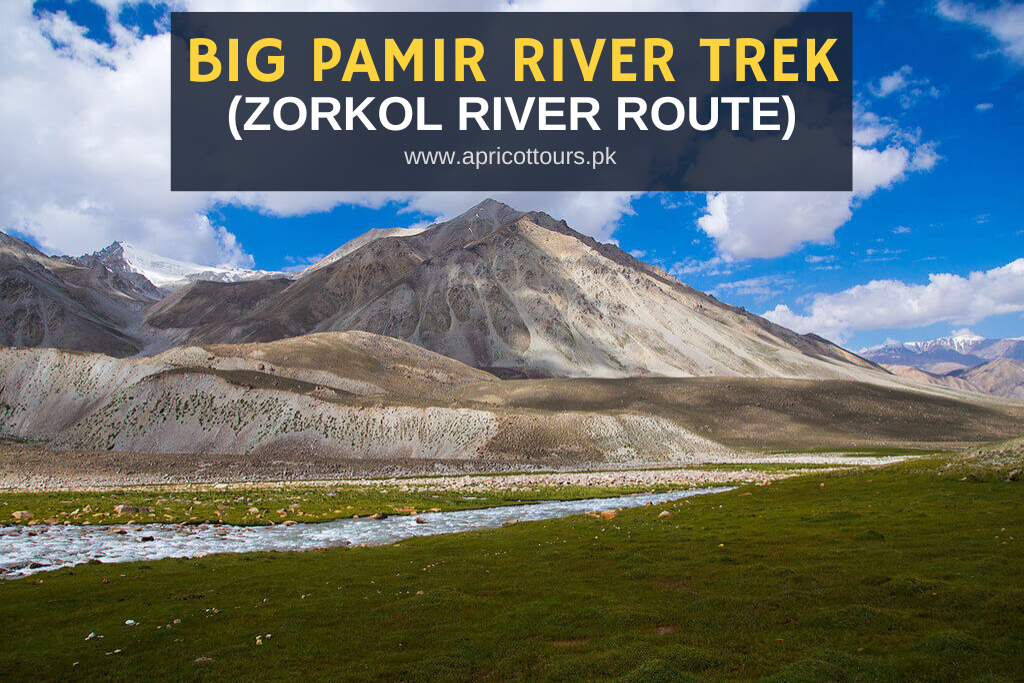
The Big Pamir River Trek (Zorkol River Route) is an incredible high-altitude journey across one of Afghanistan’s most desolate and breathtaking settings. The path begins in the Wakhi town of Goz Khun and follows the Pamir River deep into the Great Pamir, ending at the sparkling waters of Lake Zorkol near the Tajik border. This walk combines breathtaking natural beauty with unique cultural experiences, providing insights into Kyrgyz nomadic life, wide alpine plains, and timeless mountain tranquility. For those seeking pure wilderness and isolation, it is an incredible journey across the famed “Roof of the World.”
In addition to this trek, we offer the following adventure options in Afghanistan, as listed in the table below.
Dates & Cost – Big Pamir River Trek
Summers are ideal for the trek. The start and end dates in the table below are your arrival and departure dates from Afghanistan. The months mentioned below are the ideal months for trekking in the Pamir region of Afghanistan. We have guaranteed departures every year. Our dates and costs for the trek are given below.
Holiday Information
- Licensed professional guide (government requirement)
- Airport transfers on the first and last day
- All road transport in Afghanistan
- Hotel accommodation in Afghanistan (twin sharing rooms)
- Trekking accommodation in Afghanistan (twin sharing tents)
- Hotel meals in Afghanistan (breakfast, lunch and dinner)
- Trekking meals in Afghanistan (breakfast, lunch and dinner)
- Trekking logistics (tents, non-personal equipments and tools)
- Support staff (cook, assistant(s) etc)
- Porters for trekking equipments, kitchen (supplies, tools, equipments, crockery, gas) and personal luggage
- Travel Insurance (recommendations only)
- Visa to Afghanistan (supporting documents offered)
- International airfare
- Personal equipments (list provided on registration or request)
- Tips for guides, porters, staff etc
- Miscellaneous (drinks, phone calls, laundry, souvenir etc)
Highlights
The Big Pamir Trek has a lot to offer. Below are the main highlights:
- Meet the Wakhi villagers at Goz Khun, gateway to the Great Pamir.
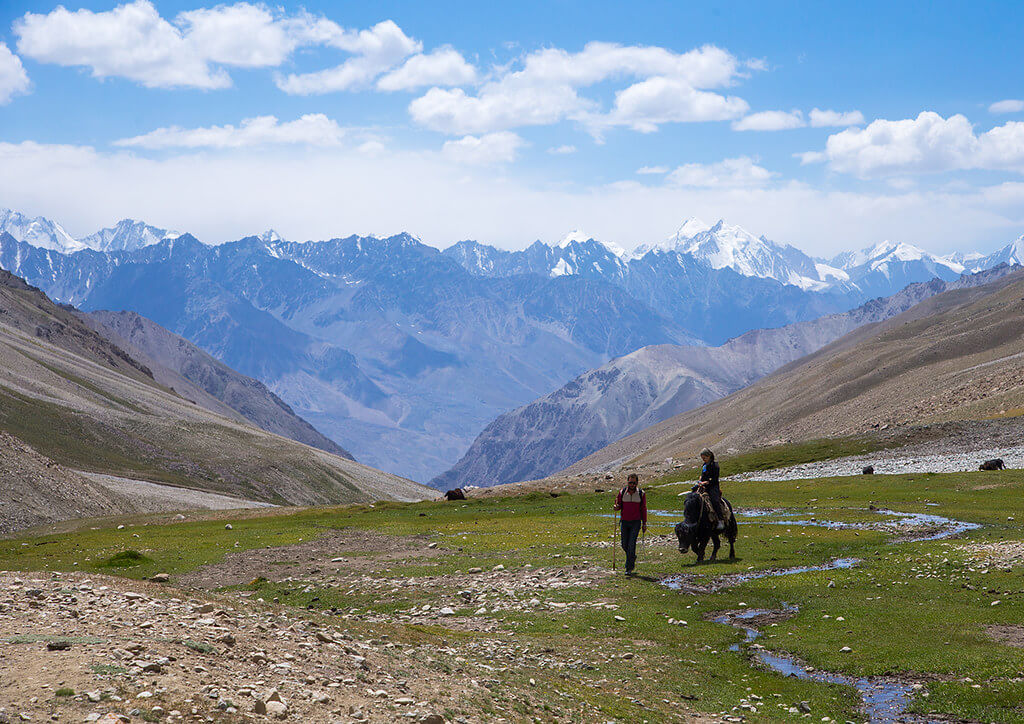
- Follow the wild and scenic Pamir River Valley deep into the mountains.
- Camp amid vast alpine pastures and highland meadows of the Big Pamir.
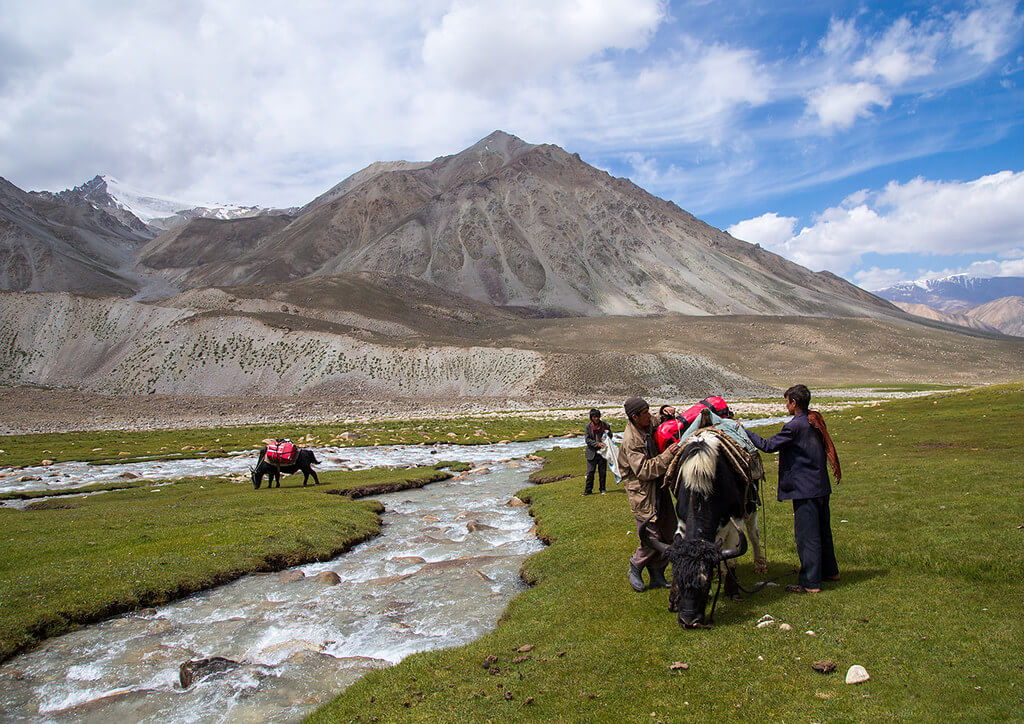
- Visit the traditional Kyrgyz summer encampments near Saremokor.
- Reach the shimmering waters of Lake Zorkol, source of the Amu Darya.
- Observe herds of Marco Polo sheep grazing on distant high slopes.
- Experience authentic nomadic life in Elghonok and nearby Kyrgyz camps.
- Discover historical caravan routes once crossed by Marco Polo and traders.
- Trek through beautiful valleys of Ali Su, Manjalaq, and Shikarga.
- Witness the untouched wilderness and breathtaking peaks of the Afghan Pamirs.
Itinerary – Big Pamir River Trek
The itinerary for the Big Pamir River Trek is given below.
Day 02: Travel to Faizabad
On this Day
Travel north on a long but gorgeous drive to Faizabad, the capital of Badakhshan province. Walk through Faizabad's bustling bazaar and feel the spirit of this historic Silk Road hub. Overnight at a local guesthouse.
Day 03: Drive to Ishkashim
On this Day
Continue your drive over the Hindu Kush mountains to Ishkashim, a small border hamlet on the Panj River that serves as the entry to the Wakhan Corridor. Before staying at a guesthouse, explore the neighborhood and its riverbank surroundings.
Day 04: Ishkashim - Qila-e-Panja - Goz Khun Village
On this Day
From Ishkashim, continue driving via the Wakhan Corridor. Pass through Wakhi settlements, including Qila-e-Panja, before arriving at Goz Khun, where the Wakhan and Pamir rivers meet. This frontier hamlet is the final permanent community before entering the Big Pamir and serves as the beginning point for the trek. Overnight in a local guesthouse.
Day 05: Goz Khun - Djangal - Shikarga
On this Day
The path leaves Goz Khun and heads upstream along the Wakhan River, passing through increasingly stunning scenery. The trail initially leads to Djangal, a stunning area with wide grasslands and river terraces against a backdrop of steep mountains. Continuing on, the trail enters the Shikarga Valley, named from its historical function as a hunting area for Marco Polo sheep. This location is particularly picturesque, with green meadows along the river and mountains rising high on each side. Shikarga is a great site to camp, surrounded by herders' shelters and offering panoramic views of the valley.
Day 06: Shikarga - Manjalaq - Ali Su
On this Day
From Shikarga, the trail gently ascends into Manjalaq, another side valley that feeds into the Amu Daria. This leg of the trek travels through several seasonal herder encampments, where Kyrgyz households graze their flocks during the summer. After admiring the view at Manjalaq, the trail continues to Ali Su, where streams from the side valley must be carefully traversed. The valley is broad and fertile, with herds of yaks, sheep, and goats roaming freely. Ali Su offers a convenient overnight stay with fresh water and various traditional shelters suited for camping.
Day 07: Ali Su - Taly Bay - Bitebet - Elghonok
On this Day
The walk to Elghonok begins by traversing the Taly Bay Valley and follows the river through Bitebet's rolling fields. The landscape swings between rocky bluffs and vast open fields, with the murmur of the Amu Daria never far distant. After a long but steady day of hiking, the path arrives at Elghonok, the final settlement on the river route. This valley is famous for its cultural significance, since it periodically hosts Buzkashi tournaments, and its Kyrgyz herders generate a lively summer environment. Reaching Elghonok marks the end of the ascent and provides a great rest stop amid nomadic households and their grazing animals.
Day 08: Elghonok - Bechkonok - Mollah - Zorkol Lake
On this Day
Walk west through Bechkonok and Mollah to reach Saremokor on Lake Zorkol's southern side (~4,450 m). Camp beside the lake, where the vast expanse of water reflects the neighboring peaks and attracts migratory birds. Overnight in Zorkol.
Day 09: Zorkol Lake Exploration
On this Day
Spend the day exploring Lake Zorkol. Take short excursions along the lakeside, explore local Kyrgyz camps, and climb low peaks to get panoramic views. This is also a good day for bird watching and learning about Kyrgyz pastoral life. Overnight camping along the lake.
Day 10: Back trek to Elghonok
On this Day
Retrace your travels westward from Zorkol, past the Mollah villages and Bechkonok, before returning to Elghonok. Overnight at Elghonok (about 4,380 m).
Day 11: Elghonok – Bitebet – Ali Su
On this Day
The trail leaves Elghonok, the final Kyrgyz village on the river route, and descends through the Taly Bay Valley to the Amu Daria. During the summer, the landscape opens up into large pastures where herders graze their sheep. The route then crosses through the Bitebet valley before continuing along the riverbanks to Ali Su. The camp is located near Ali Su, where there are basic herder shelters to defend against the wind and lots of water supplies from tributary streams.
Day 12: Return to Shikarga
On this Day
The path from Ali Su to Manjalaq follows the river, meandering across broad grasslands and passing shallow streams. The panorama here is dominated by broad terraces with snow-covered hills in the distance. The trip continues downstream until it reaches Shikarga, a picturesque side valley that is frequently used for overnight camping. Shikarga's steep hills and lush meadows make it an ideal spot to relax and appreciate the isolated tranquillity of the Big Pamir.
Day 13: Back to Goz Khun Village
On this Day
The final stage of the trip takes you from Shikarga to the pastures of Djangal, a place famed for its breathtaking beauty and spectacular river views. The track follows the narrowing valley and gradually descends to Goz Khun, the Kyrgyz village at the end of the Pamir River route. When hikers arrive at Goz Khun, they can stay in a Kyrgyz guesthouse and enjoy hospitality before rejoining the route to Qila-e Panja. This concludes the voyage along the wild and picturesque Zorkol River route.
Day 14: Travel to Ishkashim
On this Day
The trek from Ghaz Khan to Ishkashim retraces the path through Qila-e-Panja, following the Wakhan River through rural valleys and small settlements. The trip is normally calm at this time of year, as the river levels have dropped following the summer snowmelt. When you arrive in Ishkashim, you will have time to unwind and reflect on your walk, as well as say goodbye to the Wakhi guides who have accompanied you across the Pamirs.
Day 15: Travel to Faizabad
On this Day
Travel back to Faizabad, passing through Badakhshan's rolling landscapes. Spend some time exploring its lively bazaar before staying overnight in a hostel.
Day 16: Back to Kabul
On this Day
Drive back to Kabul via the magnificent Salang Pass and its medieval tunnel. Before arriving in Kabul, the ride provides breathtaking vistas of the Hindu Kush.
Day 17: Departure from Afghanistan
On this Day
End your experience with a transfer to Kabul International Airport for your departure flight.
Why Register Early?
1. Early Bird Discount: The given prices for the holiday are limited-time discount offers and are subject to change. Service providers including (but not limited) to airlines and hotels increase prices in peak-season. Early reservations cost less than peak-season.
2. Limited Flight Seats: Domestic flight seats to the Pamir and Himalayas are sold out way ahead of time because there are only two daily flights during peak season. Among other things, the deposit is used to book domestic flights for you in advance.
3. Pay Balance after arrival in Afghanistan: In these unusual times, we appreciate that paying the final balance for your trip may cause concern. Our policy is to only receive your final balance once you arrive in Afghanistan. The only payment before arrival is the deposit.
4. Deposit valid for 3 years: We understand the uncertainty surrounding the pandemic (Covid-19). As part of our relaxed booking conditions following Covid-19, deposits are valid for 2 years.
6. Pay Minimum Deposit: The deposits for the holiday are also early-bird discounts and automatically change accordingly:
- 1st October: USD 190
- 1st November: USD 290
- 1st January: USD 350
- 15th February: USD 400
- 1st March: USD 450
- 1st May: USD 490
Note: The same dates above apply to next season's deposits.
Refund Policy for All
Deposit: Once paid, the deposit is non-refundable (but valid for 2 years) as it will be spent on making in-country arrangements.
Balance: Pay the balance only after arrival in Afghanistan on the first day. Payment guidelines will be shared timely.
Currency
All international travelers can pay in US Dollars (USD) or equivalent in Euros (EUR) or Pound Sterling (GBP). Pakistani travelers are charged the equivalent in Pakistani Rupees (PKR).
Single Supplement
Separate hotel rooms (single supplement) will cost an additional USD 290. This includes all hotel nights. This payment should be made with the balance upon arrival.
Separate tents (single tent) will cost an additional USD 180. This includes the cost of additional porterage. This payment should also be made with the balance in Afghanistan.

As Featured In: [logoshowcase cat_id="217"]
Map
Overview – Big Pamir River Trek
The Big Pamir River hike (Zorkol River Route) is a remote and breathtaking tour into the heart of Afghanistan’s Great Pamir, following the Pamir River from the frontier settlement of Goz Khun to the pristine beaches of Lake Zorkol. The road winds through rocky gorges, wide alpine valleys, and limitless highland plains populated by Kyrgyz nomads who migrate here each summer with their herds. With few villages and no mountain passes to cross, the route provides both physical challenge and unusual peace, surrounded by snow-capped peaks and the great solitude of the “Roof of the World.”
This walk also displays the Wakhan Corridor’s rich cultural and historical aspects. Travelers trace the paths of ancient traders and explorers. Along the way, they witness a way of life that has changed little over the centuries. The journey concludes at Lake Zorkol, believed to be the source of the Amu Darya. The crystal-clear waters mirror the mountains and evoke the timeless essence of this undisturbed area.
Website Last Updated: September 15, 2026